George Springer
In his 13th major league season, UConn's most successful baseball player is still having fun.
By Pete Croatto
Photos by Peter Morenus
Future baseball historians will not rhapsodize over this mid-June Toronto Blue Jays–Boston Red Sox game. The Sox at this moment are hapless — in late April, management purged their coaching staff and they’re still in smoothing-out mode. The Jays, after nearly winning the World Series last year, are below .500. Boston fans have seemingly agreed to enjoy a beautiful day in a classic ballpark. Save the rancor for the Yankees.
It is a good day — and a safe one — to be a Blue Jays fan. Hours before the first pitch, Brent Moorcroft of London, Ontario, Canada, and his wife, Ednalyn, stroll outside Fenway Park. Moorcroft, who wears a baby blue George Springer jersey, loves Springer’s old-school approach. Stats, fame, and flash take a back seat to winning. “He’s always enthusiastic,” says Moorcroft, a Blue Jays fan for nearly 50 years.
Ashley Mercuri, 36, of Mississauga, Ontario, wears a “Springer 4” jersey like Moorcroft’s. “He’s got a ton of heart, a ton of energy, and he’s clutch in big moments,” says Mercuri, who’s here with her mom, Andrea. “You can see how much he cares.”
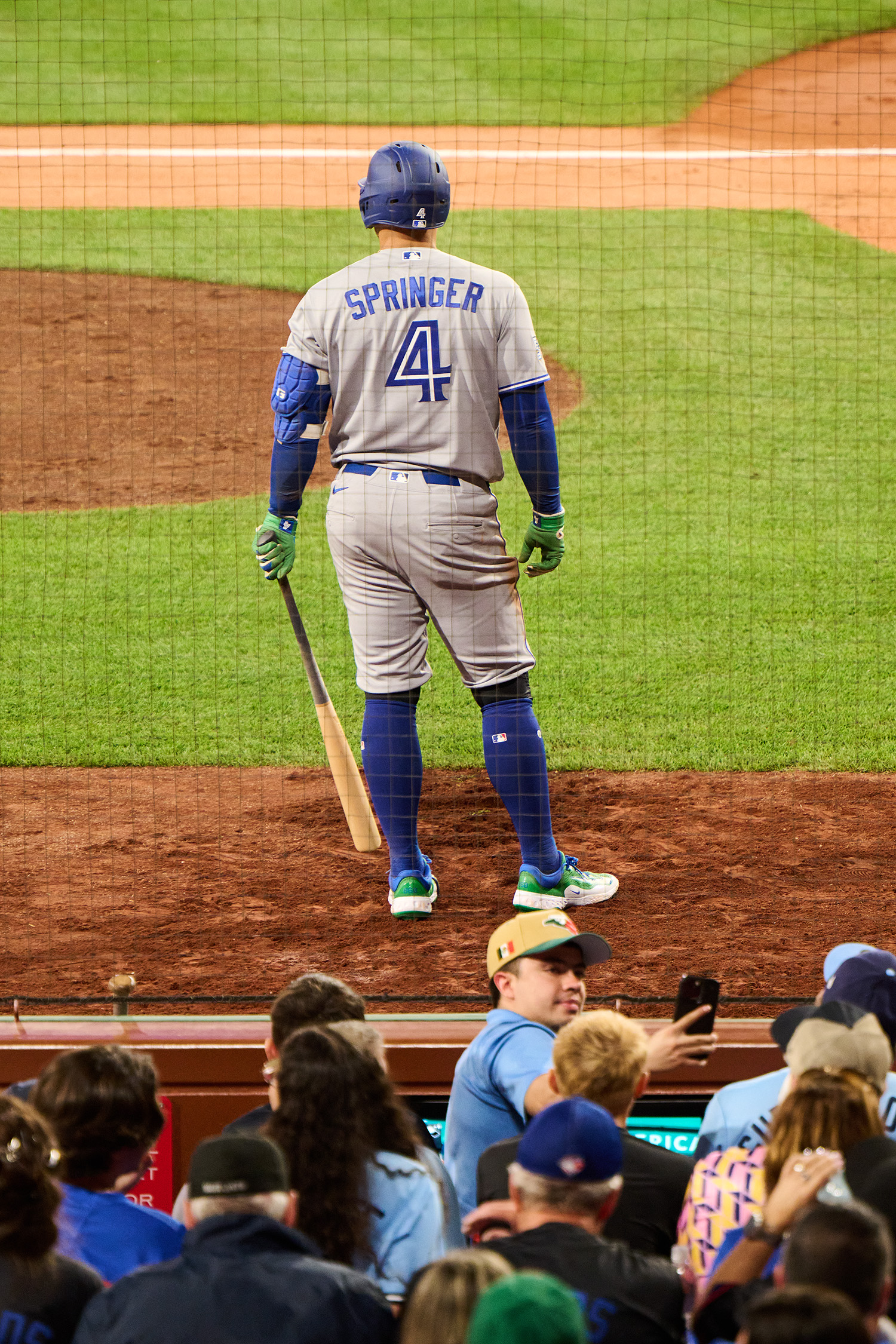
Springer, the Blue Jays designated hitter and the most successful baseball player to come out of UConn, hit his 300th career home run last night as part of this series. Currently, he sits in the visitors’ dugout half-dressed, a green glass bottle of water at his side, enjoying the pause.
Still hours before the shouts of “peanuts” and the laughing young women in shorts and the intense preppies with dim chances and the chants of “So good! So good! So good!,” Fenway Park is almost meditative, punctuated by PA music and the steady rhythm of a ballpark: that lullabying thud of a ball hitting well-oiled leather.
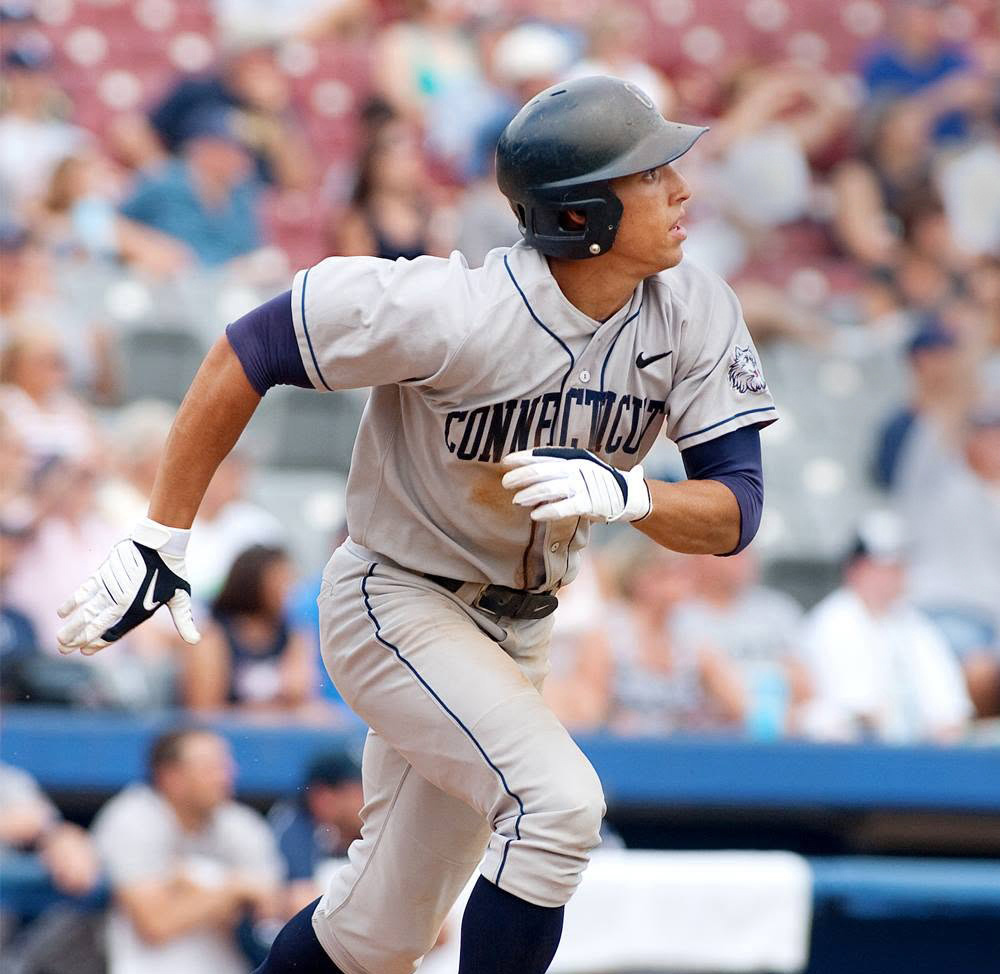
At UConn Springer was named the 2011 Big East Player of the Year.
In the middle of his 13th big-league season, Springer’s baseball life has been a string of exclamation points. If he had never played another game after leaving Storrs, he would have enjoyed a lifetime of bragging rights. As a junior, he was the 2011 Big East Player of the Year and was named a first-team All American by at least three organizations. When he left after that season, Springer held UConn career records in runs scored with 220 and home runs with 46. He ranked second all-time in total bases (452), stolen bases (76), runs batted in (196), and hits (242).
Since being drafted 11th overall by the Houston Astros in 2011, his career has regularly entered are-you-kidding-me? territory. A four-time All-Star, he was the most valuable player of the 2017 World Series, now cemented in sign-stealing infamy. Last year, Springer became a mythical figure in Canadian sports lore. His three-run, seventh-inning homer against the Seattle Mariners in Game 7 of the American League Championship Series propelled the Blue Jays to their first World Series since 1993.
Blue Jays manager John Schneider believes Springer, who has been with the team since 2021, is one of baseball’s all-time great lead-off hitters. Last night’s 300th homer is a major accomplishment — and a sign of mortality. He turns 37 in September. Handsome and almost comically strapping, Springer is a young man in the world of bills and rush-hour traffic but an increasingly creaky asset in the multi-billion dollar world of professional sports. More playing days lie dormant than expectant. His contract with the Blue Jays, worth $150 million over six years, ends after this season.
Springer has not thought much about his second act. He is the national spokesperson for the Stuttering Association for the Young, which is something he would like to continue. Talking with other stutterers, who thank him, has been a revelation. “They’ve helped me more than they realize, because I can’t spread a message and say certain things if I’m not willing to go do it myself,” he says. And he wants to spend more time with his family after all the years he spent pursuing a dream.
His wife, Charlise, a former University of Albany softball player, provides a calming presence on “the nights when I’m sitting there staring at the ceiling wondering if I can figure this out.” Their two sons witnessed last night’s 300th homer.
Springer loves that the boys are at an age where they can experience baseball with him, but he will not push the game. He knows the sacrifice required to get where he is: early morning trips coffee cannot penetrate, arrivals home in disorienting, late-night darkness. It takes a toll on parents, too. “I told my mom and dad last night, I owe all this to them,” Springer says.
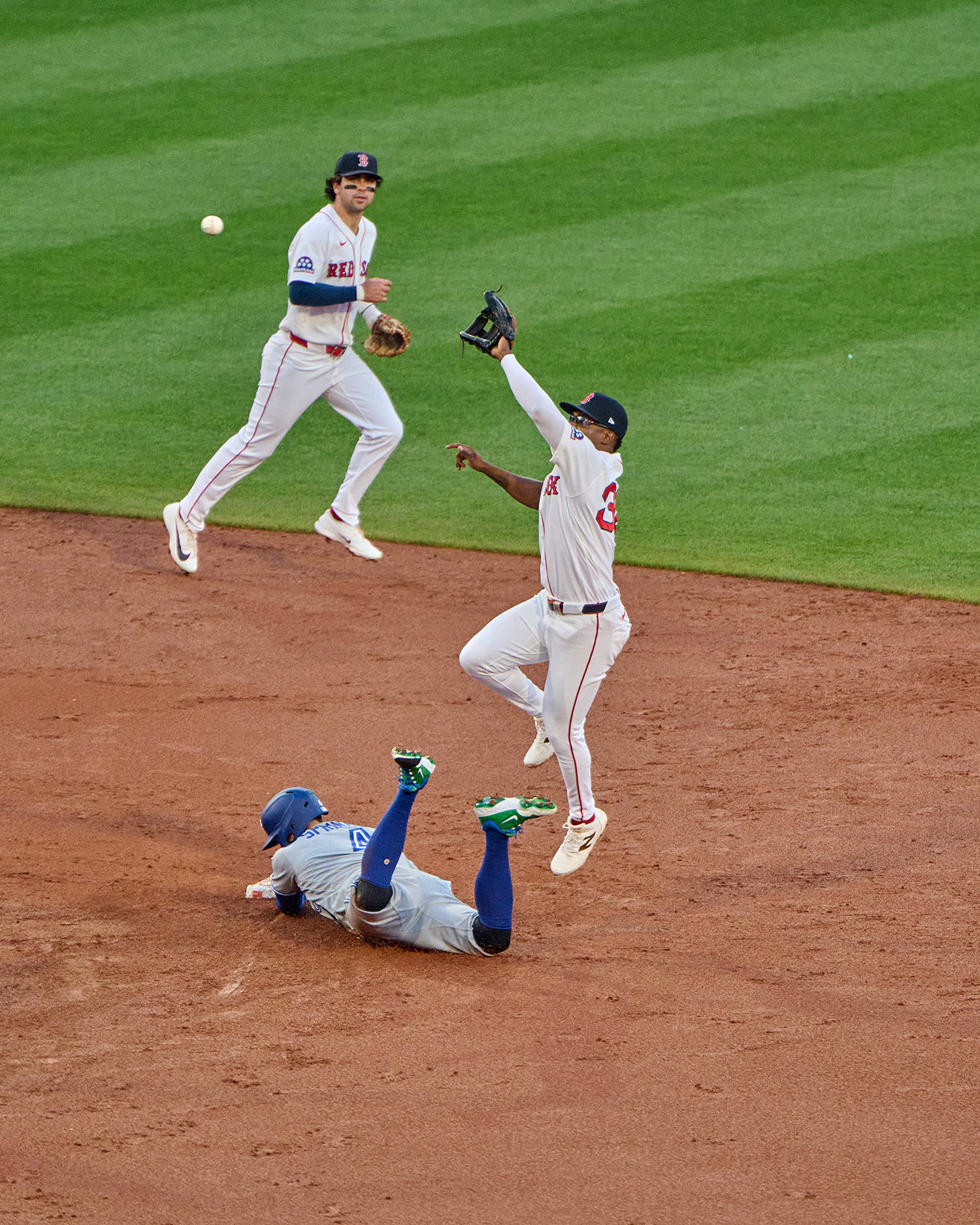
The team's designated hitter, Springer is not afraid to hit the dirt.
Last night’s home run had a significance beyond the statistical for Springer. “I spent a lot of time in these seats as a kid,” he says. The Red Sox, wrapping up their lengthy theatrically tortured era, were his team. Growing up in New Britain, Connecticut, Springer took in countless games at Fenway with family and friends.
Baseball was practically stitched in the family’s DNA. His father, George Jr. ’85 (CLAS), ’88 JD, played in the Little League World Series in 1976, and his grandfather George Springer Sr. pitched for what’s now Central Connecticut State University after emigrating from Panama. Springer’s sisters, Lena and Nicole, were softball stars who played internationally and at Ohio State and Central Connecticut, respectively. When little George (aka George Springer III) practiced, the kid’s energy was inexhaustible. He’d be in his Little League uniform a day before the game, thinking about his approach.
Springer was drafted by the Minnesota Twins out of high school, but in the 48th round. UConn head baseball coach Jim Penders remembers George Jr. and Laura making it clear that it was too soon for pro ball. College was next.
Springer’s parents are, to use Penders’ phrase, “UConn people.” It’s where they met — George Jr. played Huskies football, and Laura (Donorfio) Springer ’87 (CLAS) was a standout UConn gymnast. The family did not require a hard sell.
Penders had known Springer for years. As a freshman at Avon Old Farms School, Springer attended a UConn baseball camp. Penders looked at the 5'3", 95-pound specimen and noted “NP.” Not a prospect.
By his junior year, the body caught up. Those first weeks at UConn, Penders “had virtually no concerns about him developing as a baseball player. You’d catch stuff out of the corner of your eye that would just blow your mind. He’d do a backflip while we were warming up one day and you’d do a double take. Did I really just see that?” The physical feats came with an instinct for playing the game that Penders deems “a sign of real genius.”
The foundation for adulthood was laid in those three years. On teams ripe with future pros including Matt Barnes and Nick Ahmed, Springer faced top competition every day, and as the Huskies’ schedule grew more competitive, Penders noticed his star player never stuttered on the field, an observation that led Springer to a deeper truth.
Penders believes Springer, like most young adults, had to find his comfort level. “He stuttered a lot in my office in that first freshman fall semester when I asked him, ‘Hey, what’s going on in that history class? Why don’t you have that intro assignment done?’” Penders says. “But I think he knew that I cared. There’s an old saying: Nobody cares what you know until they know that you care. I think he realized quickly that we cared about the whole person and not just the player.”
In Springer’s words that connection “helped me be who I want to be and understand who I can be in the locker room, but also helped me off the field to have compassion, love, feel, the whole nine.” The stutter is just about gone now.
The game is personal for Springer. Among his many assets, Jays manager Schneider says, is that he knows when to lock in and when to keep things light. Rob Dowling, Springer’s baseball coach at Avon Old Farms School, remembers a bus trip to an important game. The mood was too intense. Springer, the team’s DJ, cranked up the volume on the radio and started dancing. The team loosened up — and returned home with a win.
"... His career has regularly entered are-you-kidding-me? territory."
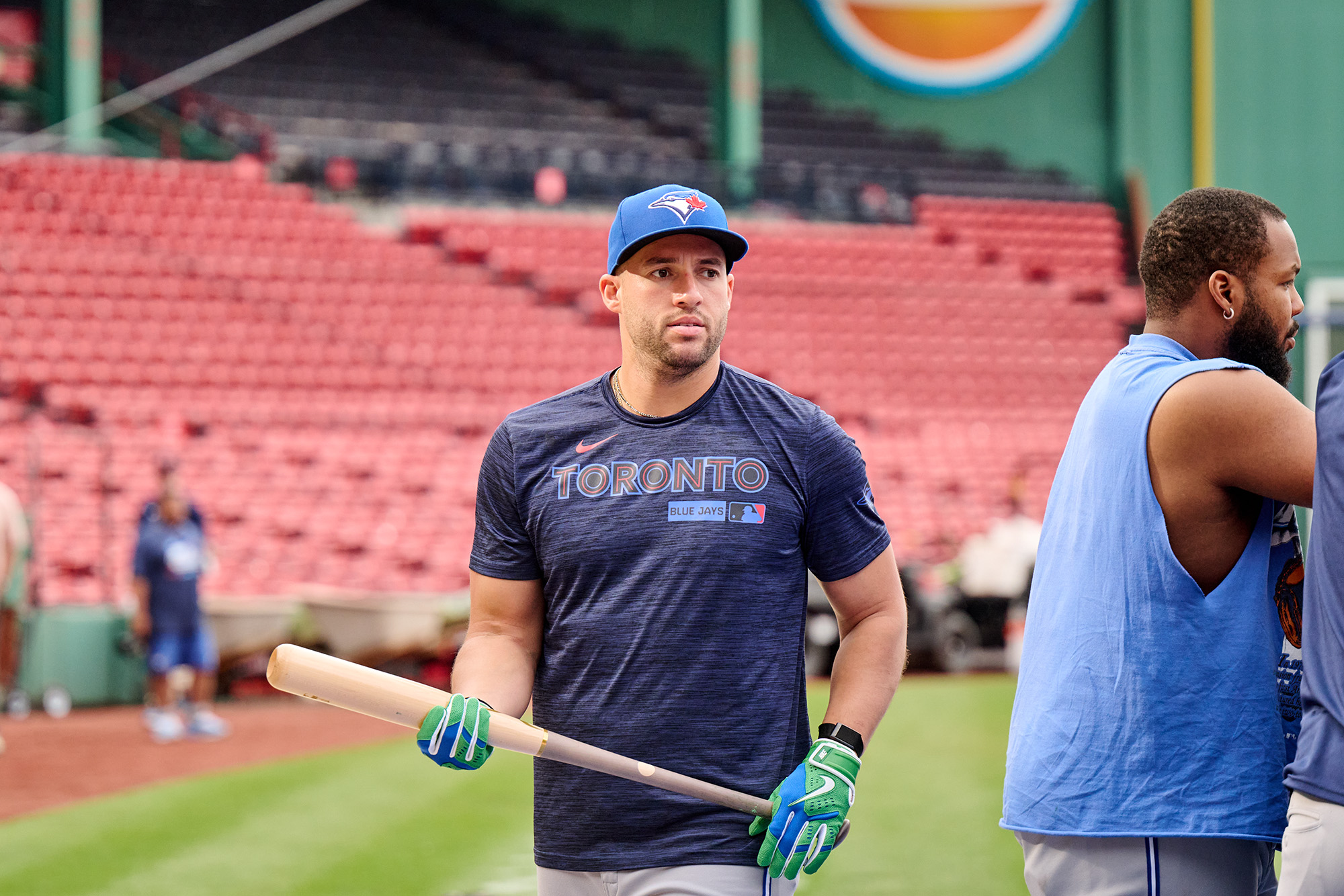
Today at Fenway, Springer still “loves every single guy that’s in the locker room.”
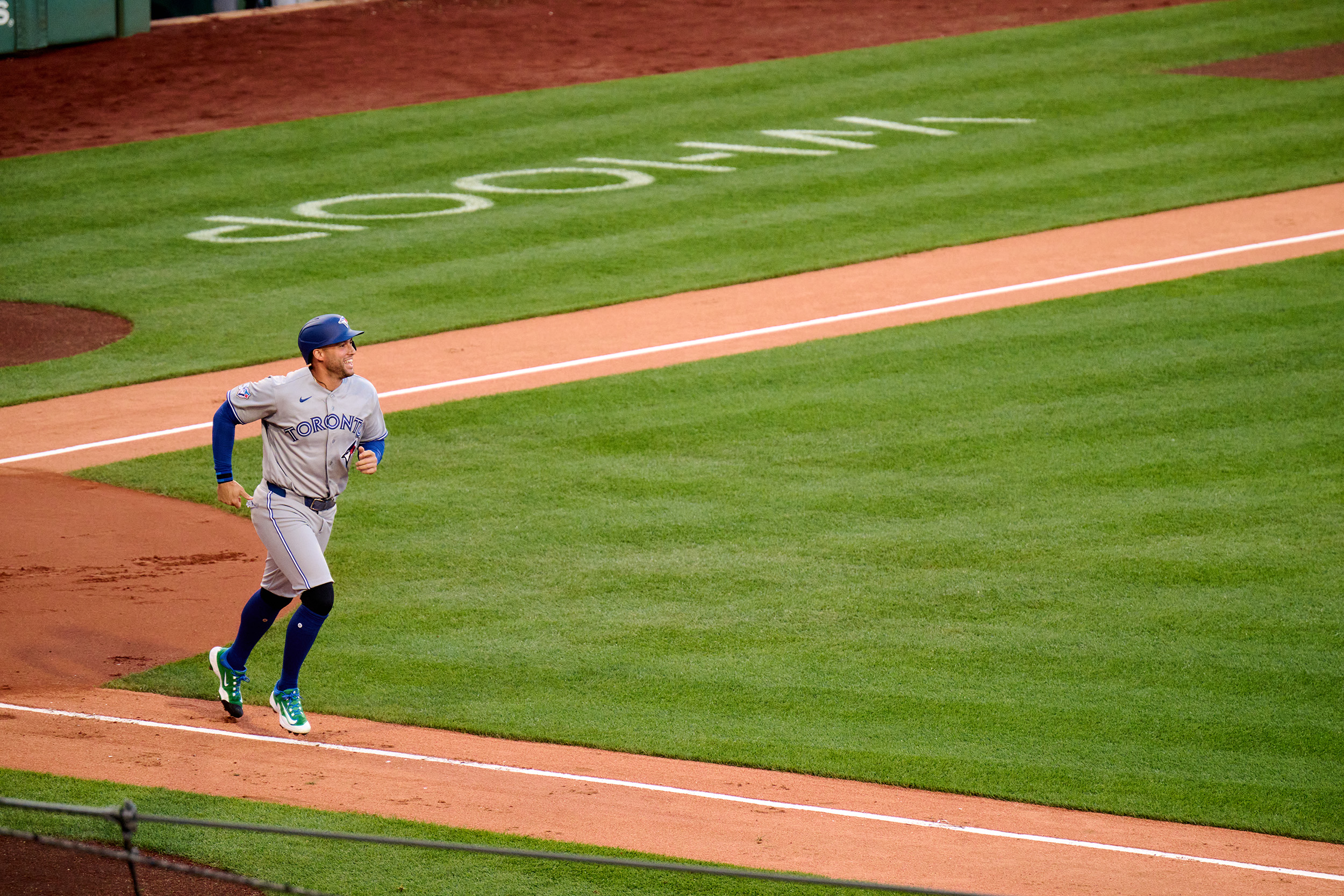
Before the first pitch, during a light, loosely defined bout of calisthenics, he dons star teammate Vladimir Guerrero Jr.’s hideous green shades. He leads the playful mocking chatter, the athlete’s mother tongue, his voice gleefully rising above the conversational, offering a glimpse into life on the other side of the foul line. “I figured you out!”
He never stops smiling. Penders says that when Springer hits a home run, “it looks like he’s never done it before.” The little boy inside has never left.
“I’m so grateful for everything that this game has given to me, which is why I feel like I have to give this game everything every single day,” Springer says. “The memories that I have — the friendships, the relationships — are something that I honestly can’t put into words.”
The peace shatters as the Blue Jays’ batting practice ends. Fenway’s organist unleashes a peppy, frantic barrage of Top 40 classics, including Naked Eyes’ remake of “Always Something There to Remind Me.” Anybody raised by Martha Quinn can instantly summon the lyrics: “You’ll always be a part of me.”
Right now, the field is pristine. It’s a sparkling afternoon. It’s time for George Springer to be a kid again.
"He never stops smiling ... The little boy inside has never left."