Liberating Miss America
By Emily Gold Boutilier
UConn professor of history Micki McElya thought she knew Miss America. Specifically, she thought she knew the pageant that took place in Atlantic City, New Jersey, in late summer 1968, amid one of the most tumultuous and consequential years in U.S. history.
Martin Luther King Jr. was assassinated in April 1968, Robert F. Kennedy in June. It was the deadliest year of the Vietnam War for American troops. In August, the Republican National Convention in Miami nominated Richard M. Nixon for president, and outside the Democratic National Convention in Chicago, police violently attacked anti-war protesters. “Mr. Rogers’ Neighborhood” premiered nationally in 1968 — so did “Rosemary’s Baby.”
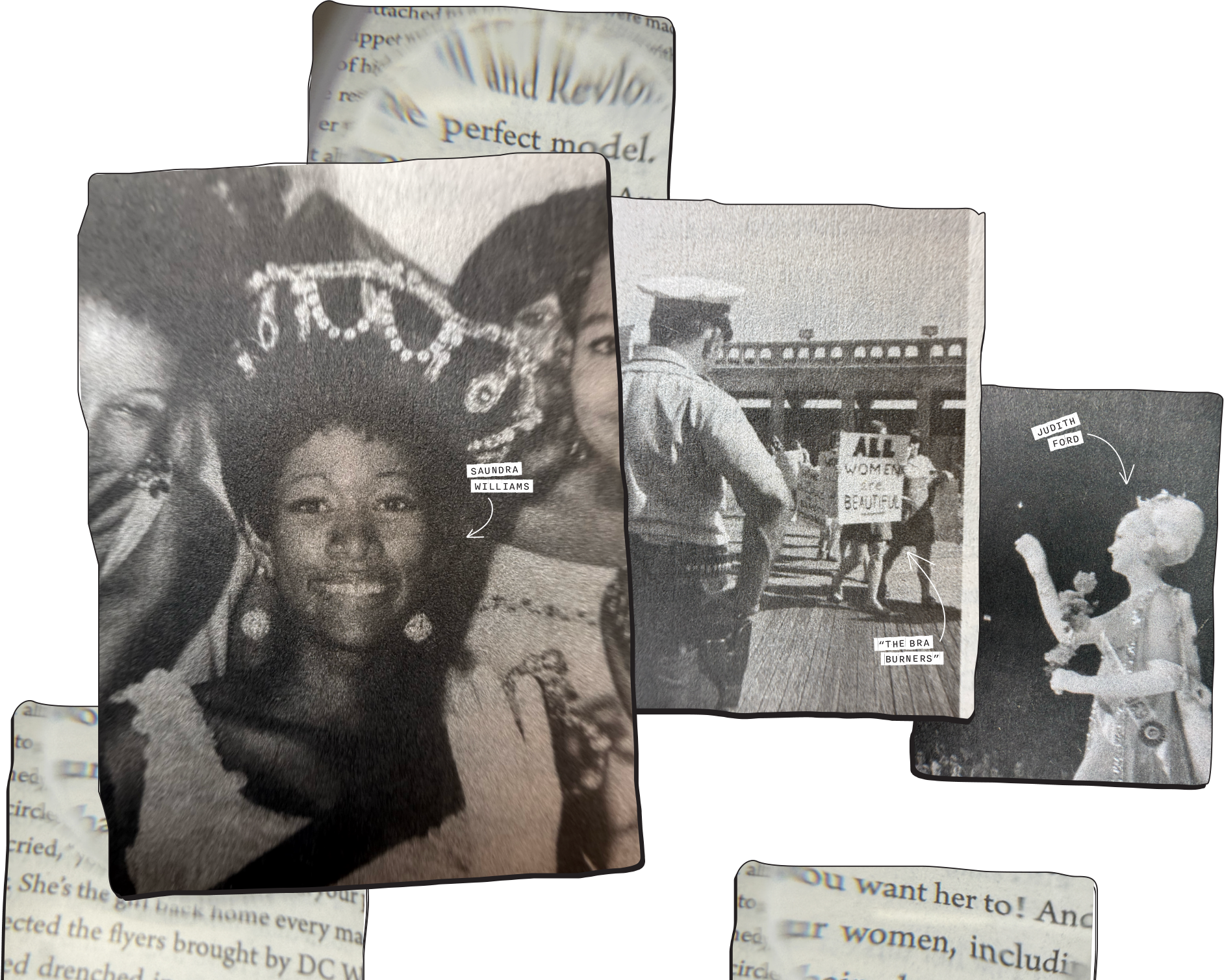
Back then, Miss America was part of the monoculture. Millions turned their dials to NBC on Sept. 7, 1968, to watch Illinois’ 18-year-old Judith Ford, a world-class trampolinist, sob while being crowned as “your ideal … the queen of femininity … with her all-American face and form,” to quote the pageant’s anthem.
But that year’s contest is best known for what happened right outside. On the boardwalk, a women’s liberation protest sparked a media frenzy. It introduced mainstream Americans to the very term “women’s liberation” and to the lasting impression of feminists as “bra burners” (which they weren’t; more on that later). Featuring signs that read “Can Makeup Cover the Wounds of Our Oppression?” and “Let’s Judge Ourselves as People,” the protest is widely considered a defining moment in second-wave feminism.
Whether in upper-level seminars or in the history department’s survey course on the U.S. since 1877, McElya loves to teach the pageant and protest, because the news photos are so striking and her students are so interested.
But when the professor came across a book by sociologist Maxine Leeds Craig, it shook up everything she thought she knew about those events. “Ain’t I a Beauty Queen? Black Women, Beauty, and the Politics of Race” introduced McElya to a second pageant — and protest — held a few hours later and a few blocks away: the first Miss Black America contest. Like Miss America, Miss Black America continues today. It’s helped launch the careers of Oprah Winfrey (1971’s Miss Black Tennessee) and the Jackson Five, which had its first national TV appearance at the 1969 pageant.
Reading the book in 2009, McElya was floored that she had never heard of Miss Black America, especially given that her expertise is race and gender in U.S. history.
“I have failed so hard,” she thought. “How did I miss this?”
That crisis of confidence is the origin story for McElya’s book “Liberation Summer,” a sweeping work of U.S. history published in July by Avid Reader, a Simon & Schuster imprint. Like her 2016 book on Arlington National Cemetery, which was a Pulitzer Prize finalist, “Liberation Summer” was released to critical acclaim. It’s written for a popular audience rather than a scholarly one, which comes out of McElya’s teaching.
“I wouldn’t write the way I do if I didn’t also teach,” she says. In both settings, she aims to reach as broad an audience as possible. “We have to be held accountable by other scholars, but I’m not interested in a contained environment where the only people who can understand what I’m saying are historians,” she says.
McElya started “Liberation Summer” while wrapping up “The Politics of Mourning: Death and Honor in Arlington National Cemetery.” While the two titles would seem to have little in common, both explore race and gender and both concern a question Americans have sought to answer for 250 years: How do we decide who is worthy of honor?
The new book spotlights and contextualizes the 1968 Miss America Pageant and its two protests. Flashing back in time to Thomas Jefferson and forward to trad wives, McElya makes the case that beauty is a central force in U.S. history. “It saturates everything,” she says. “You can’t understand American politics without acknowledging how women are expected to represent themselves, how much the currency of appearance can gain for women, and how much can be lost because of it.”
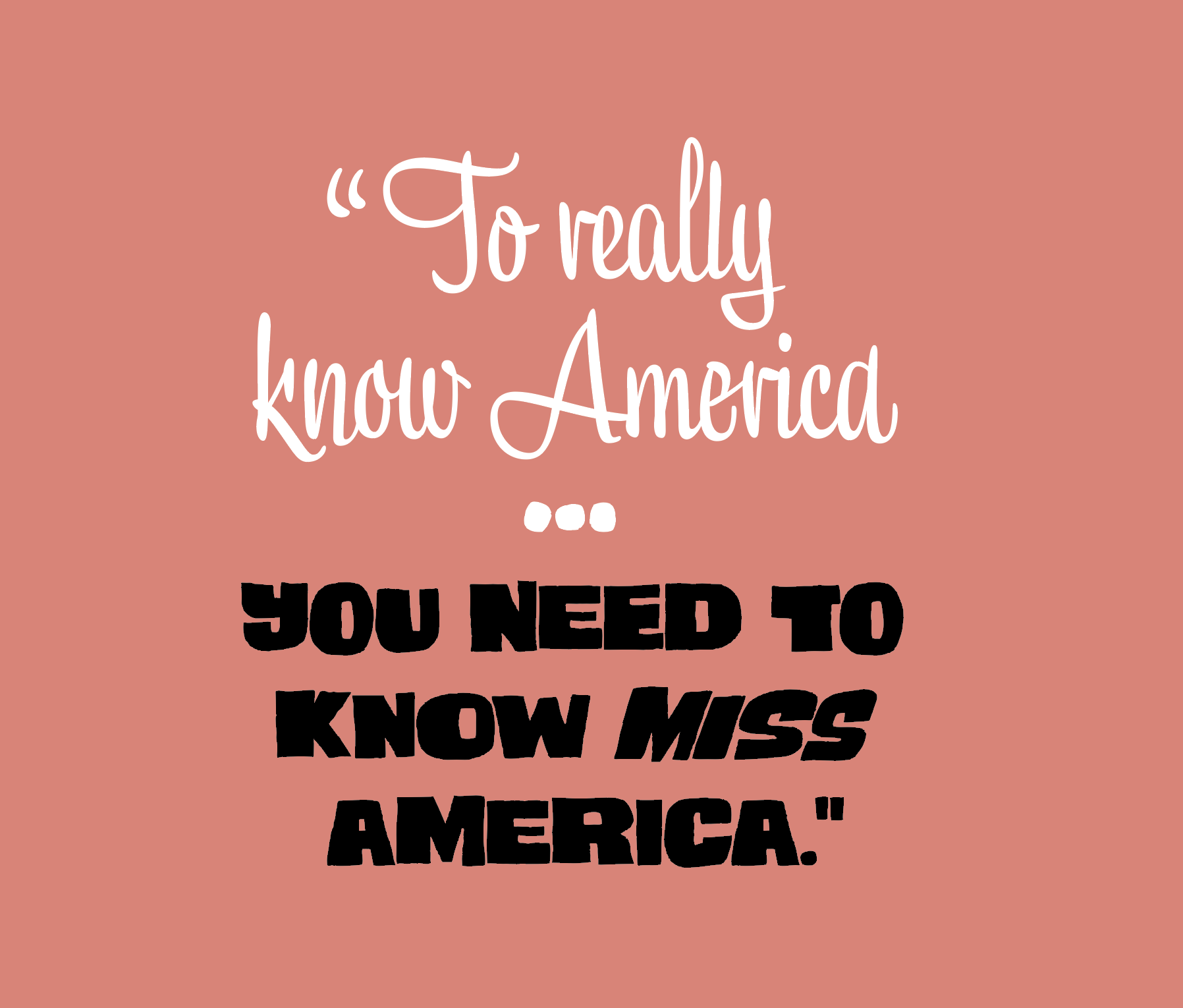
To really know America, she says, you need to know Miss America.

“Liberation Summer” opens on Saundra Williams in an evening gown atop a convertible. Soon she’ll be crowned the first Miss Black America. McElya writes:
At the semifinals the night before, Williams had performed her own poem, “Awareness,” as spoken word set to music. The poem was about a little girl ashamed of her hair, her lips, and her dark skin, convinced that she is ugly and always will be. In the course of the poem, she learns that she is beautiful; by the end, she’s proud to say, “I am Black!”
It was a message Williams had needed to learn herself. She had stopped straightening her own hair a few months earlier. She hadn’t been trying to imitate white women before — not consciously anyway; like everyone else she knew, Saundra had grown up understanding the difference between “good hair” and “bad hair.” Straight and smooth meant pretty and presentable, and could make a real difference in a Black woman’s life. Now her short Afro said: I refuse to imitate white women. I am Black, and I am beautiful.
The New York Times described Williams as a slim, “curvy, hazel-eyed coed” who’d helped lead a successful protest against a whites-only restaurant, who drew boos from some in the pageant hall when she said husbands should do equal housework, and who “looked bored when asked about the 100 women demonstrators, mostly white, who had picketed the Miss America Pageant.”
The article ran next to one on the new Miss America. Times reporter and editor Charlotte Curtis asked a still-tearful Judith Ford for her thoughts on everything from whether 18-year-olds should get the vote (yes), to whether a Black woman could be Miss America (“as long as she’s the prettiest”), to the Democratic National Convention (“I hate to talk about this. It’s so controversial”), to whether blondes have more fun (“I don’t know. I’ve never been a brunette to compare it with”).
These three women — Williams, Ford, and Curtis — are among a long cast of characters in McElya’s book. Many of their stories converge in Atlantic City, like that of counterprotester and future Miss America Terry Anne Meeuwsen sporting a “Nixon for President” button. Many go on to work in or around politics; Meeuwsen, for example, became cohost of “The 700 Club” on the Christian Broadcasting Network.
McElya writes about Carol Hanisch, who came up with the women’s liberation protest idea, and J. Morris Anderson, who founded Miss Black America to give his daughters, in his words, “something to look forward to that wasn’t fantasy or a lie.” The book connects the 1955 debut of Bert Parks crooning “There she is, Miss America,” on live TV with the funeral days earlier of the Black 14-year-old Emmett Till, “who’d been tortured and murdered in Mississippi after supposedly whistling at a white woman.” McElya continues:
The pageant song celebrated idealized womanhood and national beauty by encouraging looking, assessing, and wanting — or wanting to be. But Till’s murder, and the long line of American lynchings it joined, served as a reminder of the deadly consequences of the “wrong” person’s admiration.
Phyllis Schlafly and Hillary Clinton (an intern at the 1968 RNC) are both in “Liberation Summer,” as are many less famous women, like Eva Nichols, a member of the Yankton Sioux Tribe who in 1948 protested the Miss America rule that contestants must be white. That rule was official until 1950 and unofficial for much longer.
“I’m not usually seeking to repopulate the past,” the professor says, “but that was very much a part of my work here. There are so many women who have been lost to this story, ignored, or assumed to be the kind of pretty pageant contestant who doesn’t have her own set of political ideas and her own relationship to changing feminism.”
Black, white, feminist, beauty queen: “Our categories are so insufficient for describing how human beings actually operate,” McElya says. “I wanted pageant contestants to be recognized in the fullness of what they’re doing, what they’re hoping for themselves, what they’re expecting for others. Arguably, everyone’s imagining a different world in this moment. These women are imagining it through beauty.”
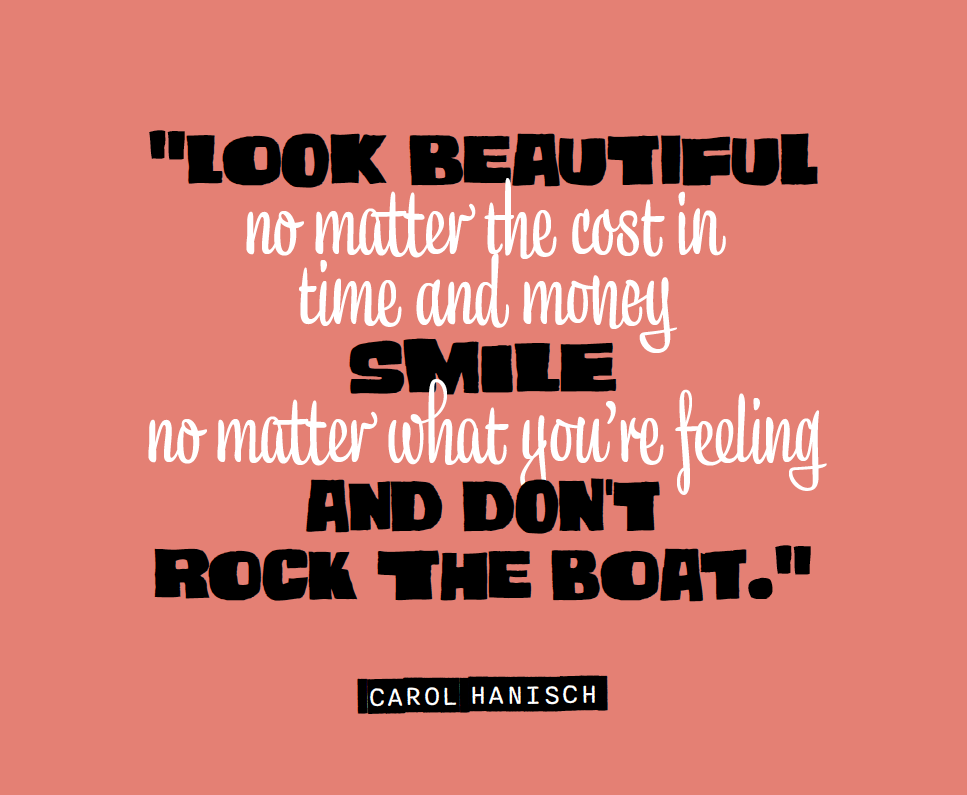
Hanisch imagined it differently. “Shaving your legs, doing your hair, putting on makeup — those are political acts that from the women’s liberationists’ perspective reinforce structures of oppression” and prevent true equality “because of the punishments and rejection that come to women who don’t do those things,” says McElya. “Liberation Summer” describes the moment when Hanisch proposed the action:
To unite women, they must take on issues that speak to the oppression they all experience in daily life, she said. And here’s “this American icon — the Miss America Pageant — telling women what to look like, what to wear, how to wear it, how to walk, how to speak, what to say (and what not to say) to be considered attractive. In short: look beautiful (no matter the cost in time and money), smile (no matter what you’re feeling), and don’t rock the boat.”
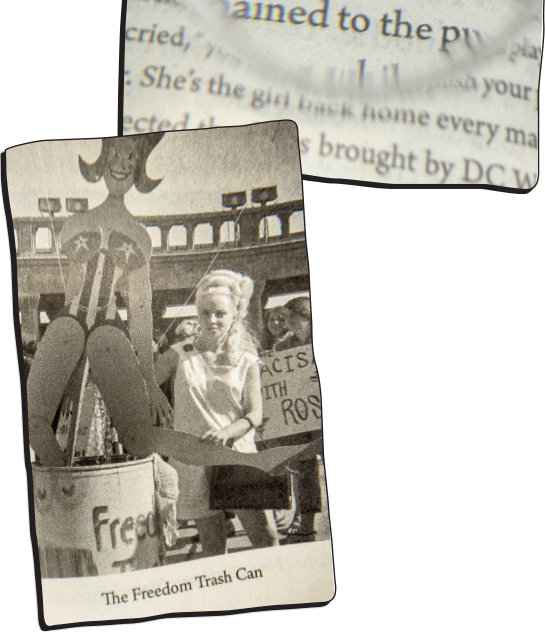
In Atlantic City, women threw girdles, hair curlers, and yes, bras, into a “Freedom Trash Can.” But nothing was burned. That myth originated in the media.
Hanisch viewed pageants as oppressive. Saundra Williams viewed Miss Black America as empowering. Meanwhile, McElya says, a backlash against “bra burners” opened space in politics for women who upheld the Miss America ideal.
Which of these women is worthy of honor?
In “Liberation Summer,” McElya honors all of them — by taking them seriously. She takes beauty itself seriously, too. It’s not just high heels and lipstick. It’s American history.

“There are so many women who have been lost to this story, ignored, or assumed to be the kind of pretty pageant contestant who doesn’t have her own set of political ideas and her own relationship to changing feminism.”
— Micky McElya, History Professor