Who Is America?
UConn professor and Pulitzer Prize–winning photojournalist Steven G. Smith crosses the country to find out.
Words and Pictures by Steven G. Smith, as told to Julie (Stagis) Bartucca ’10 (BUS, CLAS), ’19 MBA and Kimberly Phillips
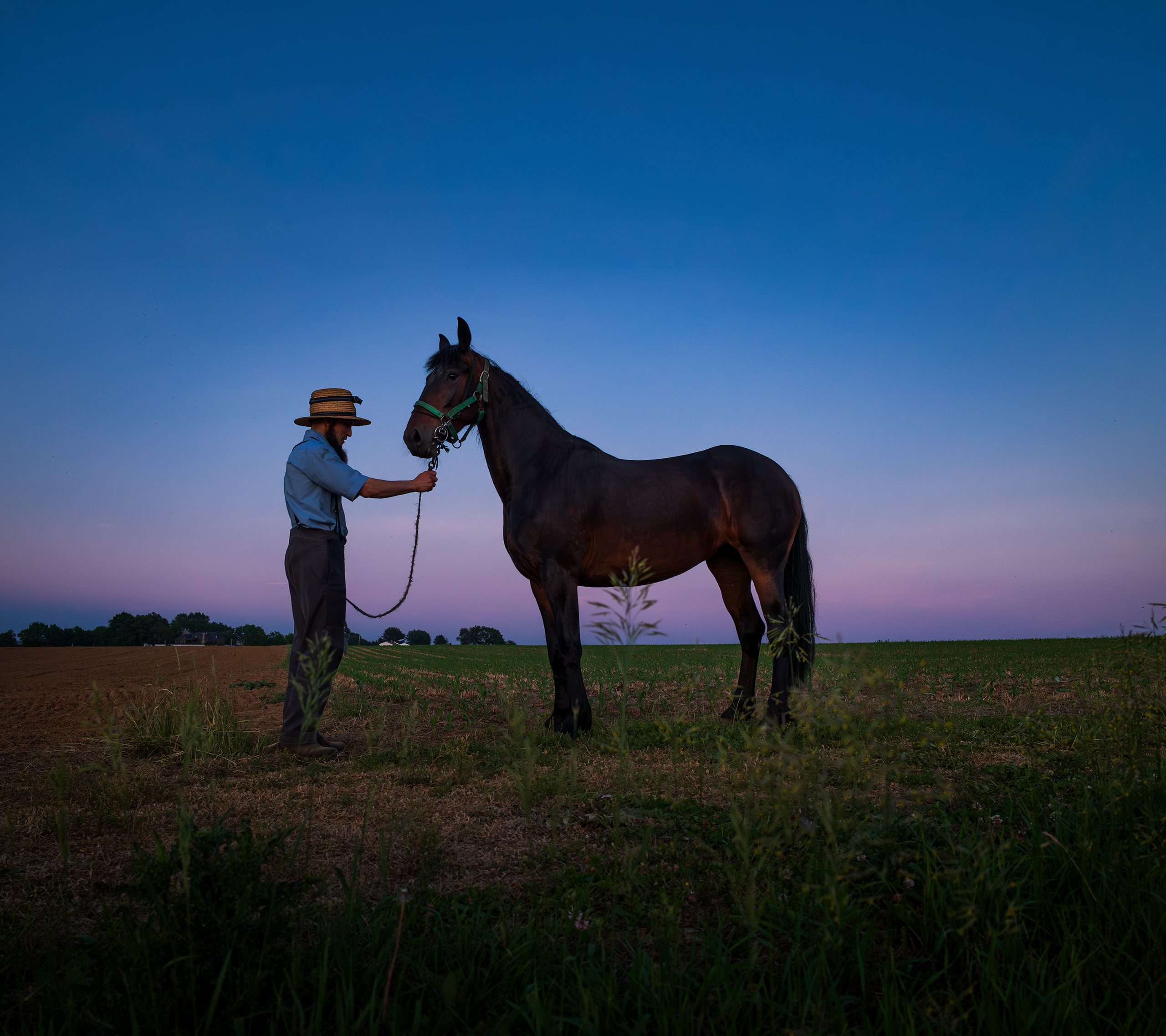
Driving through rural Pennsylvania in June, Steven G. Smith debated whether to stop to photograph an Amish farmer. The man was walking his horse on a lead, the light just perfect from the setting sun — but he would never allow a photo, Smith thought.
“I drove a half mile past and hit the brakes, put it in reverse, got out with my camera, and asked him, ‘Can I take a picture of you walking your horse?’” recounts Smith, a Pulitzer Prize–winning photojournalist who retired as a UConn journalism professor this summer. “He goes, ‘Oh yeah. You betcha.’ And we just continued with a really wonderful conversation about how he was training his horse to be on the road.
“He was fascinating,” Smith says. “The sad part about stereotypes is we so quickly write people off, and we miss out on these opportunities to learn from them and to enrich our lives. People want to tell their story.”
For the past three years, Smith has visited 42 states to document American life today. Named an Andrew Carnegie Fellow for 2025, Smith dedicated his fellowship year and $200,000 grant to completing the project he called “These United States.”
“It’s such a negative time right now politically, I just wanted to bring it back to humanity. That’s really all I wanted to focus on,” says Smith. “There’s such a depth to our culture in the sense that we can go to all these different places and see vastly different people. That’s a richness we don’t want to miss out on.
“My hope is that the work encourages viewers to look a little longer and perhaps see one another with greater understanding and empathy.”
Though he snapped more than 20,000 frames, Smith has been curating his work along the way for a forthcoming photography book, museum exhibitions, and a digital multimedia experience. We asked him to pare way down, choosing one photograph that challenges a stereotype, one that surprised him, and one that represents what it means to be an American today. Here’s what he had to say about the choices.
Stereotype Buster
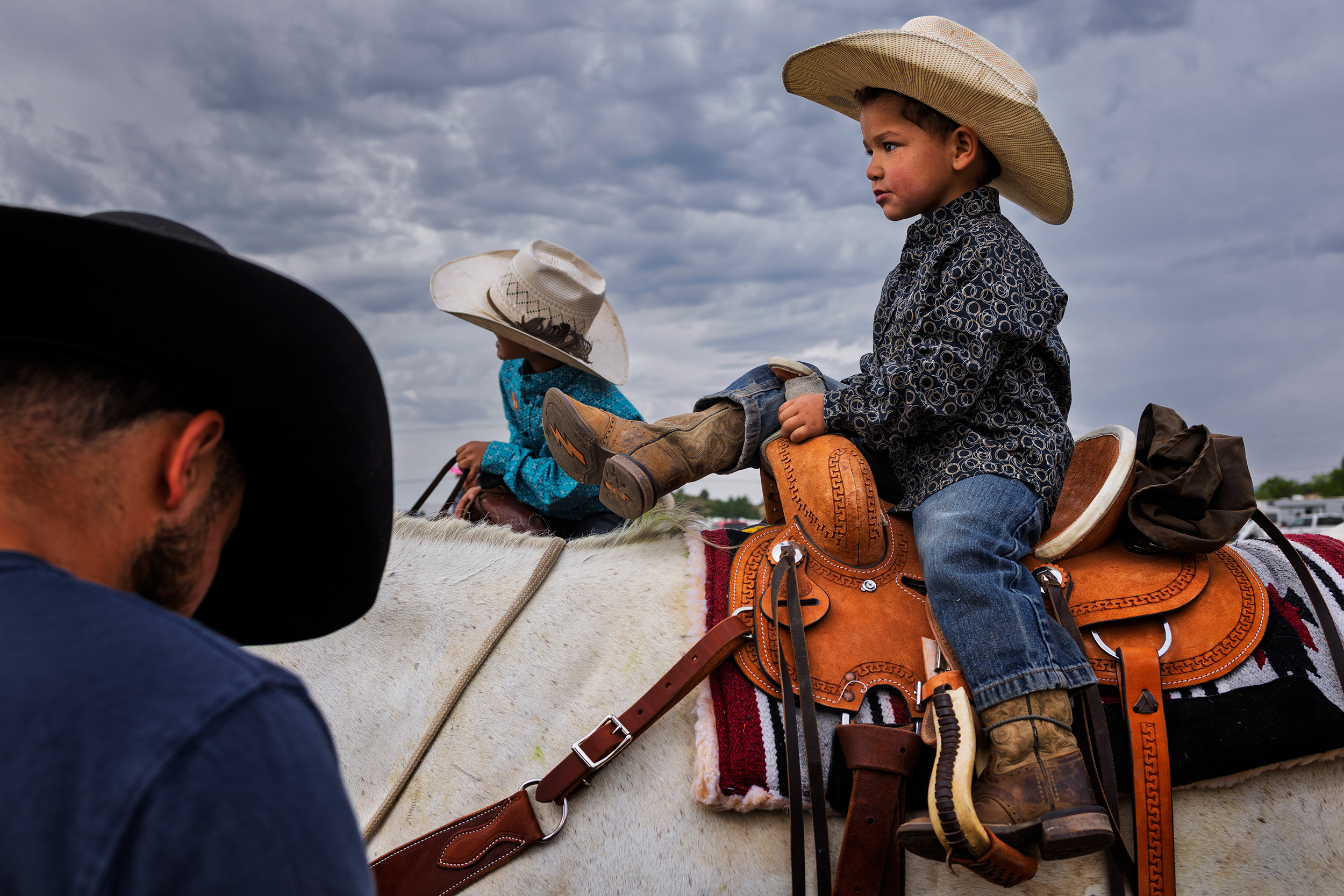
“His First Rodeo”
Chama, New Mexico
August 10, 2025
Matthew Sanchez, 3, of Cuba, New Mexico, prepares to compete in barrel racing at a rodeo in Chama. His brother Joseph, 7, waits nearby on horseback.
Documentary photography begins with careful observation. I am always searching for that elusive moment of visual poetry, when gesture, light, and composition come together, even while knowing there is no such thing as a perfect photograph. In the end, authenticity matters more than perfection.
One of the great gifts of this project has been learning that every community carries stories that challenge our assumptions. In the American Southwest, I was often reminded of the phrase “We didn’t cross the border, the border crossed us,” a reflection of the region’s deep cultural and historical roots that long predate contemporary borders and belonging.
There is something beautiful about watching two young cowboys waiting patiently for their turn. This ordinary moment quietly brings together family, culture, and tradition. It reminds me that American identity is neither singular nor fixed. It is layered, evolving, and carried forward across generations.
Most Surprising
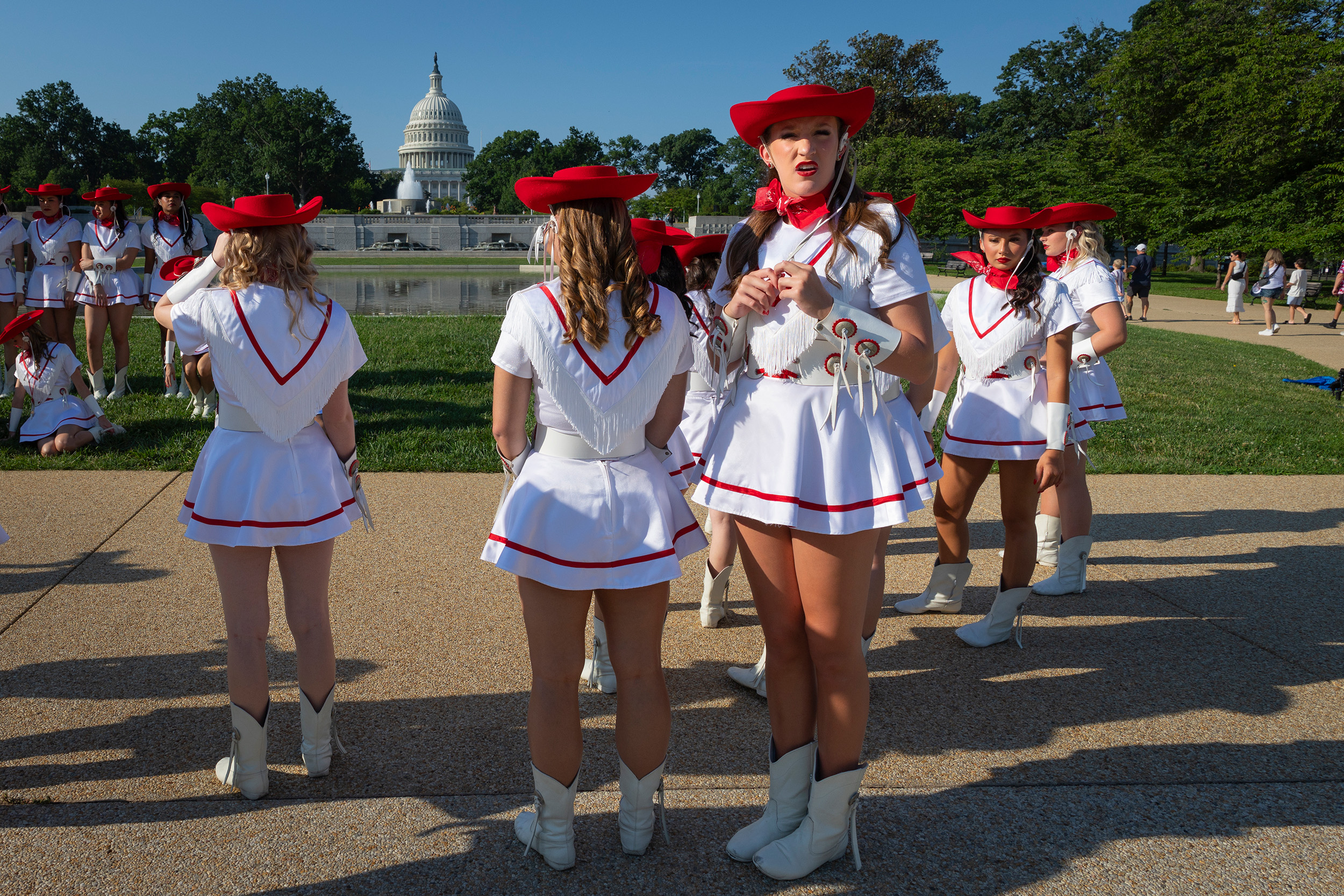
“Cardettes”
Washington, D.C.
July 4, 2026
While working near the U.S. Capitol, I met a group of young women from Trinity Valley Community College in Athens, Texas, who were taking a picture in front of the building. They had traveled by bus to march in Washington, but shortly after arriving, they learned the National Independence Day Parade had been canceled because of extreme heat and humidity.
Photography is one of the ways I make sense of the world. I try to observe quietly and remain open to the small lyrical moments of everyday life. I feel paying attention is a form of respect, and often the photographs that stay with me are the ones I never expected to make.
This was not the photograph I expected to make that day, but it became a quiet story about perseverance and making the best of an unexpected situation. It also reminds me that American culture often lives in the gatherings, in the small moments of tradition and shared experience.
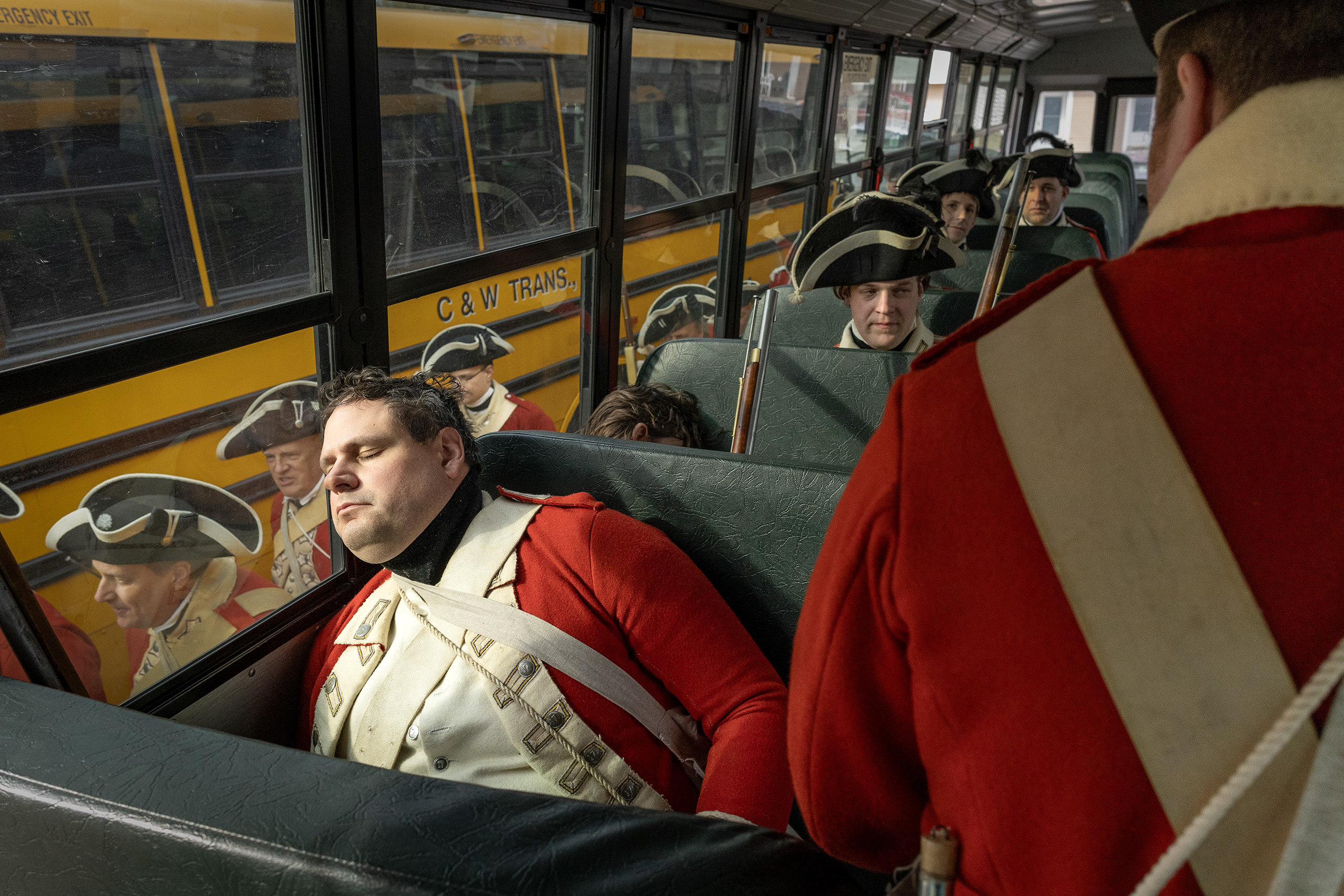
Bonus — On the Print Magazine's Front Cover
“The British Are Coming”
Lexington, Massachusetts
April 19, 2025
I’ve often thought about how to connect the past and present for this project. The 250th-anniversary reenactment of the Battle of Lexington gave me a rare chance to try. During a break in the action, I got on a shuttle bus with the reenactors and found this scene. The early morning had clearly worn everyone out.
I’m drawn to moments of contrast and quiet irony, where history and daily life meet.
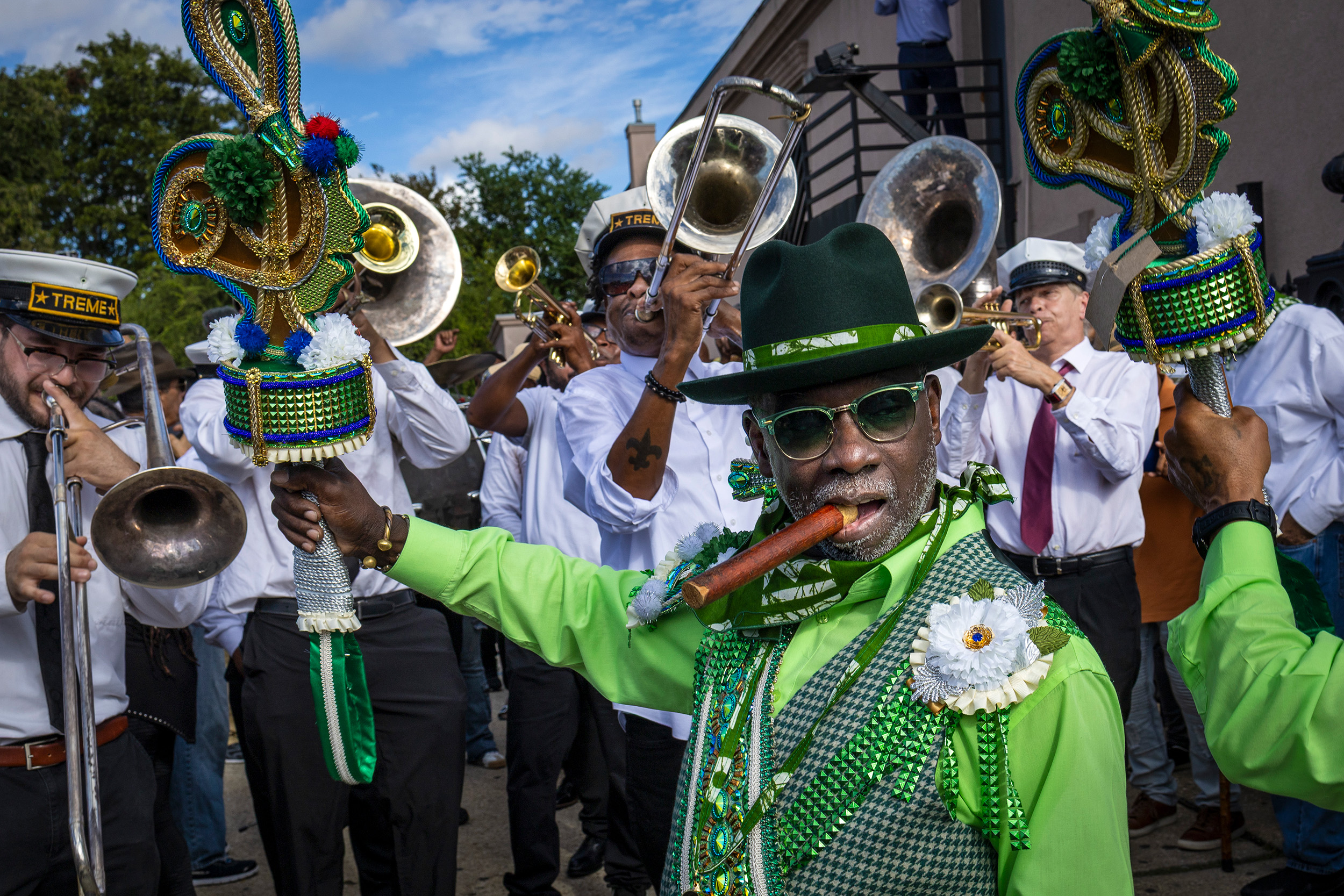
Bonus — On the Print Magazine's Back Cover
“The Second Line”
7th Ward, New Orleans, Louisiana
October 26, 2025
Before going to New Orleans, I had read about second lines, but I had never seen one. Spending time with the people there and taking photos showed me how these processions became celebrations of community, strength, and joy. What first looked like a jazz parade meant much more.
Projects like this remind me that documentary photography is as much about learning as it is about taking pictures. Every place I visit has its own history, customs, perspective. My best photos come when I slow down and stay curious.
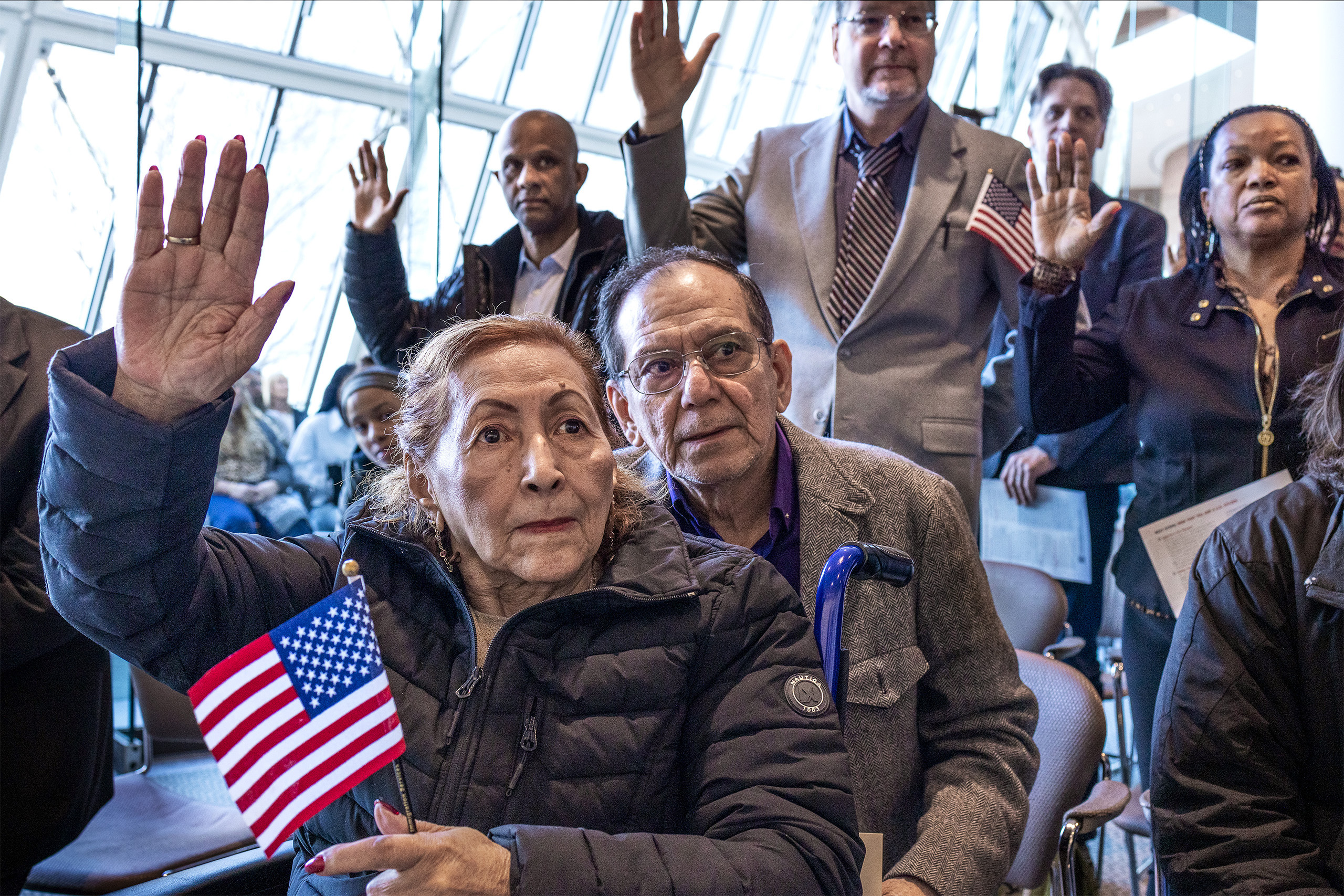
What It Means to Be American
“Naturalization Ceremony”
Boston, Massachusetts
March 12, 2025
Of all the places I photographed for “These United States,” the naturalization ceremony in Boston stands out as one of the most memorable.
I emailed ahead and asked permission to photograph the ceremony at the John Joseph Moakley U.S. Courthouse. Still, I was surprised by the extraordinary diversity of people gathered in the room. Participants waved small American flags. Strangers hugged one another. As they took the Oath of Allegiance and began a new chapter as Americans, it was a proud moment, and almost everyone I met wanted their photograph taken to remember the day.
Projects like this remind me that photography is most powerful when it connects people rather than separates them. I want to photograph America not as an outsider but as someone who is truly paying attention. For me, paying attention is a form of respect. The camera becomes a bridge rather than a barrier.
This photograph means a great deal to me, not because it offers a simple answer to what it means
to be American but because it reminds me that America is always changing and growing. You can see it in our cultures, our differences — and in our shared hopes for the future.