
Interesting
Financier Ted Karns believes you can build character exponentially by building upon each of your good choices in the same way investors compound interest to grow wealth.
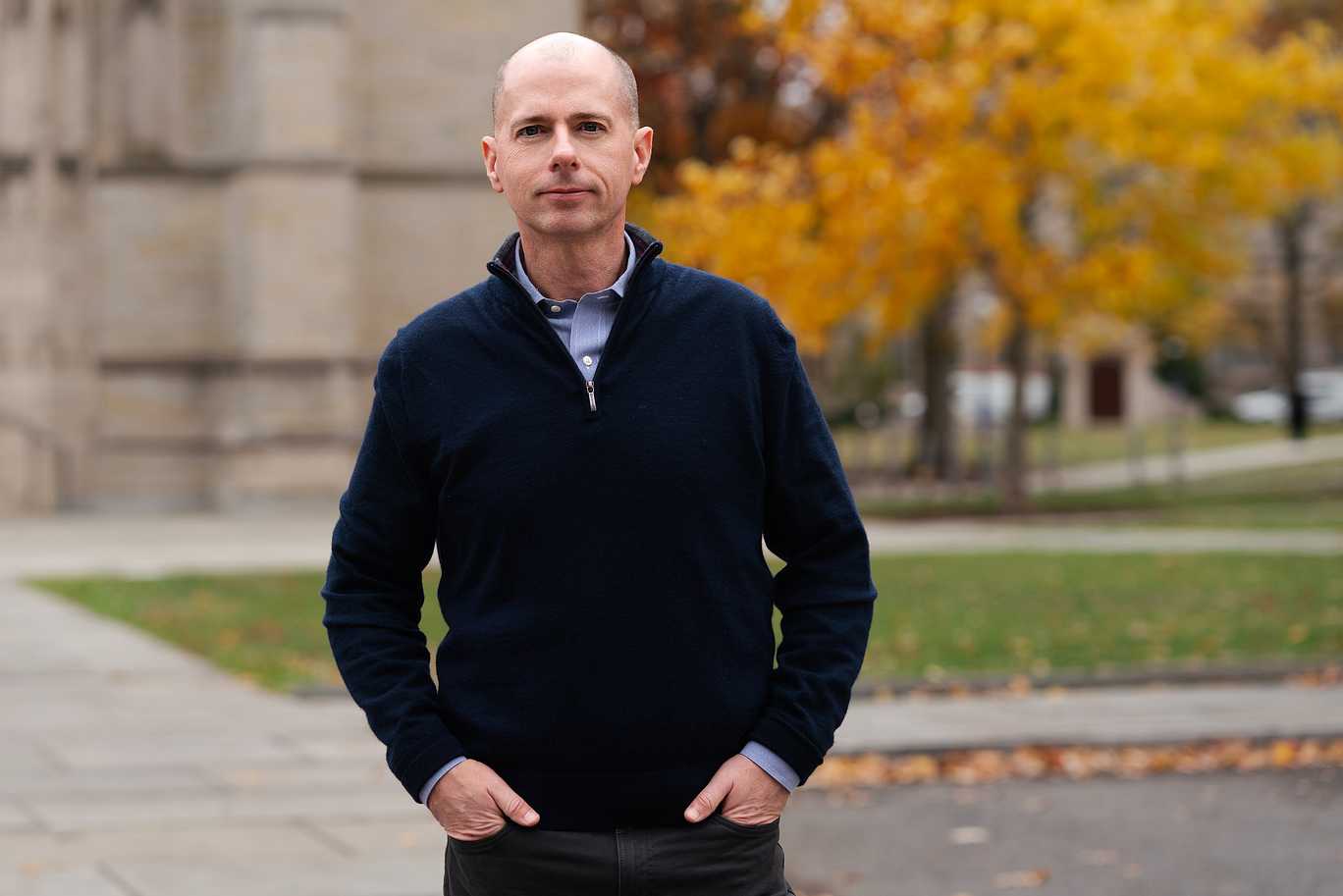
Ted Karns ’01 JD learned early in life to value things that last, informed by the harshest of life experiences — losing his father to cancer when he was 8, followed by a house fire two years later.
“The takeaway was watching my mom,” Karns says. “It was just amazing how she reacted to some really tough challenges — losing her husband, the house fire. She also got Parkinson’s when she was 50. Through all of that, she remained incredibly optimistic and supportive and welcoming. I learned the meaning of resilience and how to keep things in perspective. When colleagues would get worked up about a missed promotion or a lost deal, I always had the sense that ‘This is important, but it’s not everything. There’s much more to life.’”
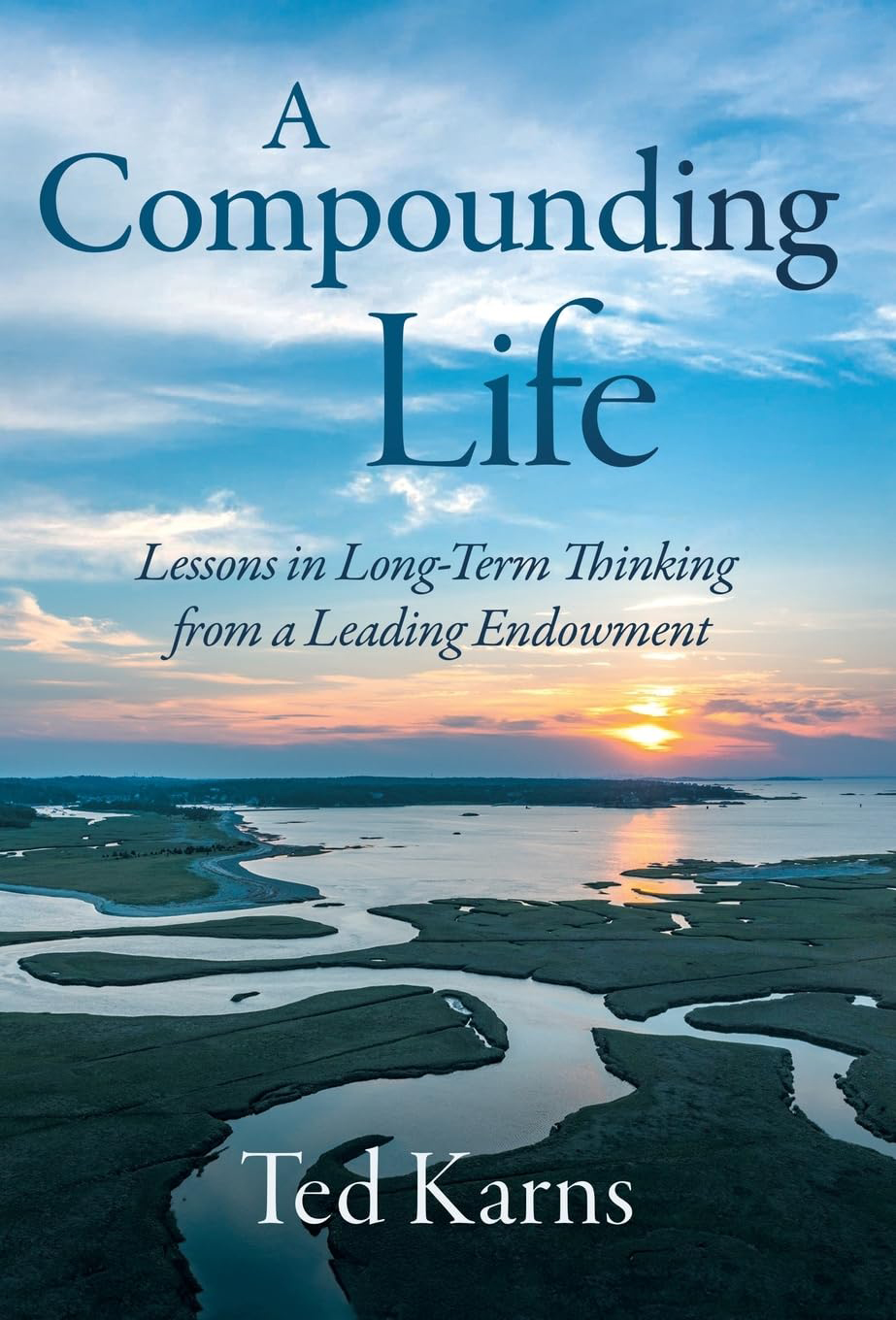
Karns spent 15 years mastering the world of investing as the managing director for Princeton University’s $34 billion endowment. His recent book, “A Compounding Life: Lessons in Long-Term Thinking From a Leading Endowment,” details a philosophy of life seen through the lens of investing. It suggests you can grow more than just your bank account by making intentional value-driven decisions about things like relationships, character, and purpose that build in value over the course of a lifetime.
“I wrote the book especially for students and young professionals,” Karns says. “If I could tell them one thing, it’s that the small, values-aligned choices matter more than the dramatic ones. You probably won’t see the payoff right away, but that’s how compounding works. If you think about compound interest, about interest on interest — small decisions each have an additional impact, and then each of those has additional impact, until you have a kind of exponential growth.”
Those decisions include the people you work with or for. Investing in a hot new idea might be compelling, but the trendiness of the idea isn’t as important as the character of the people building or running the business, says Karns.
He tells the story of a dinner meeting with a new venture capital team who, instead of wining and dining him at a fancy four-star restaurant, treated him to a simple chicken parmesan. “They were just themselves. They were not trying to impress. One of the things that was most impressive about that team was that they very much wanted to be continual learners. They wanted feedback. We were having a dialogue. They wanted to build a firm that would be continually getting better. We would actually help each other get better.”
Through experiences like that while managing the endowment, Karns learned to value humility and curiosity over bravado, the kind of character that endures while the world changes all around it.
In the professional and the personal, says Karns, demonstrating character builds trust and pays off over time. He cites an enduring relationship with his mentor, Mark, a pioneer in the private equity industry who was also a friend of Karns’ in-laws. “Over the years, he was always very supportive, but he never glossed over things. If I asked him something, I knew I would get the truth. I called him when Princeton offered me the job — it was a step down from what I had at the law firm where I worked, and I was stuck on that. Mark listened, and then he told me to think less about the title and more about the kind of learning and community I wanted around me, and to see it as more than a job change.”
According to Karns, that conversation shaped the next 15 years of his life, and he worked to continue building the trust he had with Mark. “I started with a balance and added to it slowly over the years, one email and one lunch at a time.”
Having good mentors, says Karns, makes you want to pay it forward. His mission now is to help people understand the value of continual investing in what endures. It’s one reason he left Princeton to teach courses on venture capital and the principles of finance at Boston University’s Questrom School of Business. There, he explains to students how starting a savings account that earns interest when they’re young will set them up with financial security when they reach retirement age. And helping others might be the greatest investment of all — a lesson Karns learned after his father died.
“No one person filled that role,” he says. “Many, many people stepped up to be helpful to my family. There were a number of Holy Cross priests who were incredibly generous with their time. One of my friends’ fathers, a stepfather, my sister, my Nana, my grandmother in Dorchester, my aunt and uncle — it was just a community of family and friends who were incredibly supportive of my family, for which I am grateful.”
In his teaching and in his book, Karns hopes to pay forward their kindnesses.
By Peter nelson