
"Blue-and-White Blood"
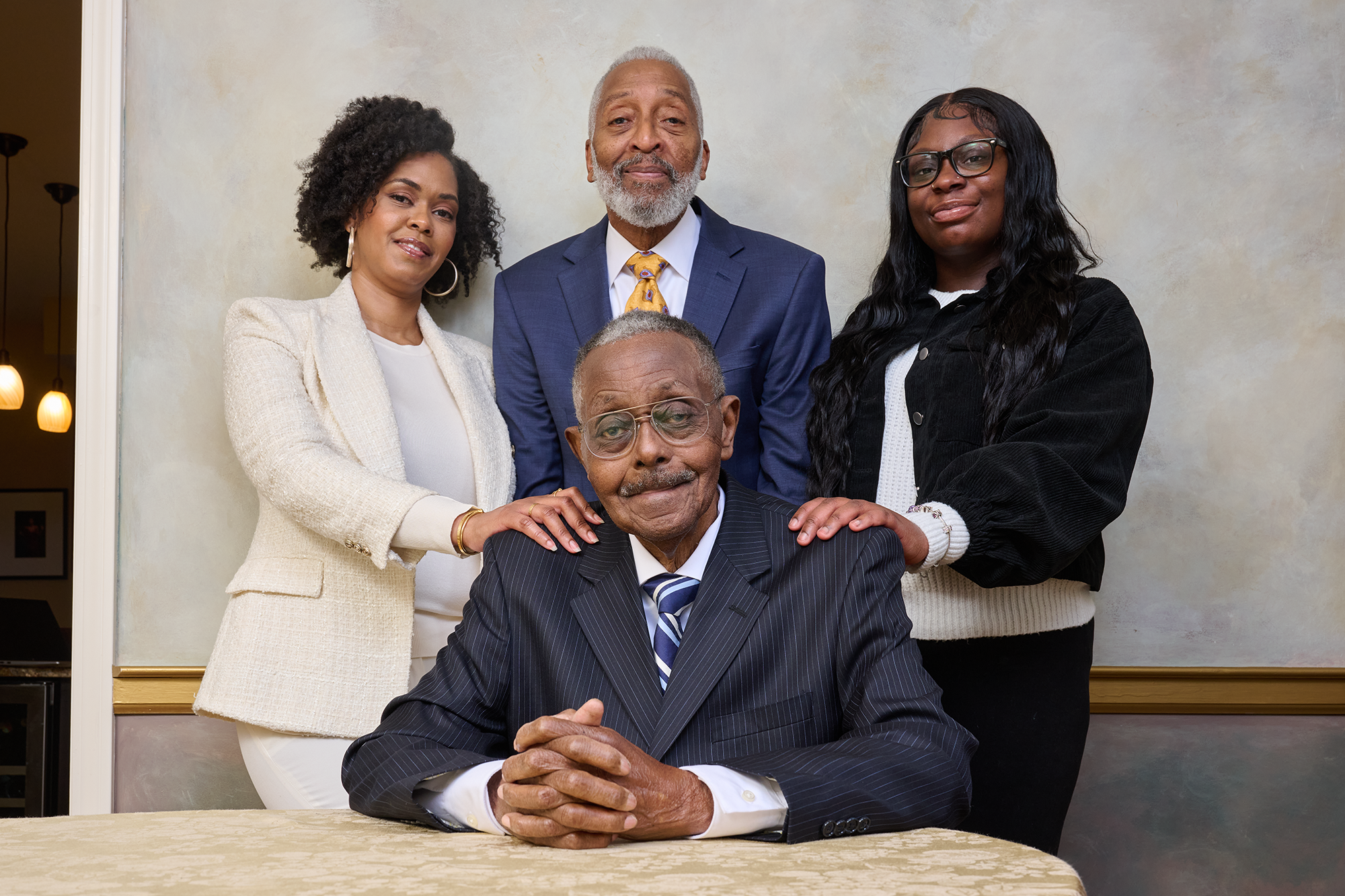
The Blankses at Leonard’s home in December: Courtney, Leonard, Solé, and Otis (seated).
On Mother’s Day 2025, Solé Blanks ’25 (CLAS), ’26 MA, draped in blue regalia, stepped across the floor of Gampel Pavilion when her name was called, continuing a family legacy as the fourth generation to graduate from UConn.
Only yards away and 65 years, 10 months, and 27 days prior, Blanks’ great-granduncle Otis “Sonny” Wade ’59 (CLAS) donned a black cap and gown for his commencement at the old Memorial Stadium on June 14, 1959. That year, the University held a single ceremony — compared with 16 today. Albert Nels Jorgensen, known now for his namesake on-campus theater, was the University president and conferred the degrees.
Wade was among just dozens of Black students enrolled at the University at the time. He’d transferred to UConn after starting his college career at Morgan State, a historically Black college. He was homesick, according to family lore, and his older sister traveled to Maryland to bring him back.
Now 92, Wade struggles with his memory, but lights up when asked about his UConn days. He joined the Beta Sigma Gamma fraternity, one of only two on campus at the time that accepted non-white students. Wade lived in on-campus fraternity housing and played stand-up bass in a trio hired for dances and social gatherings on campus and around Connecticut and Massachusetts.
“Those were some days,” he says, quick to shake his head when asked if they got up to any mischief. All good clean fun, it seems.
In 1970, Wade’s nephew Leonard Blanks Jr. ’86 (SFA) started his own UConn journey. Financial constraints meant he went into the workforce with 90 credits under his belt, but he came back in 1984, graduated in 1986, and, shortly after, began a 33-year career in the University Communications office. His daughter, Courtney Blanks ’05 (CLAS), who had been a toddler on Leonard’s graduation day, followed in his footsteps and was grateful to be close to home when serious health issues hit during her first year.
“Because I had my father on campus, I was able to work through that with the support I had there,” says Courtney, who also credits support from the Center for Students With Disabilities and Chantel Thomas, a staff member who served as a mentor. “It allowed me to have that space to grow and still get my education within four years. I wouldn’t have been able to do that anywhere else.”
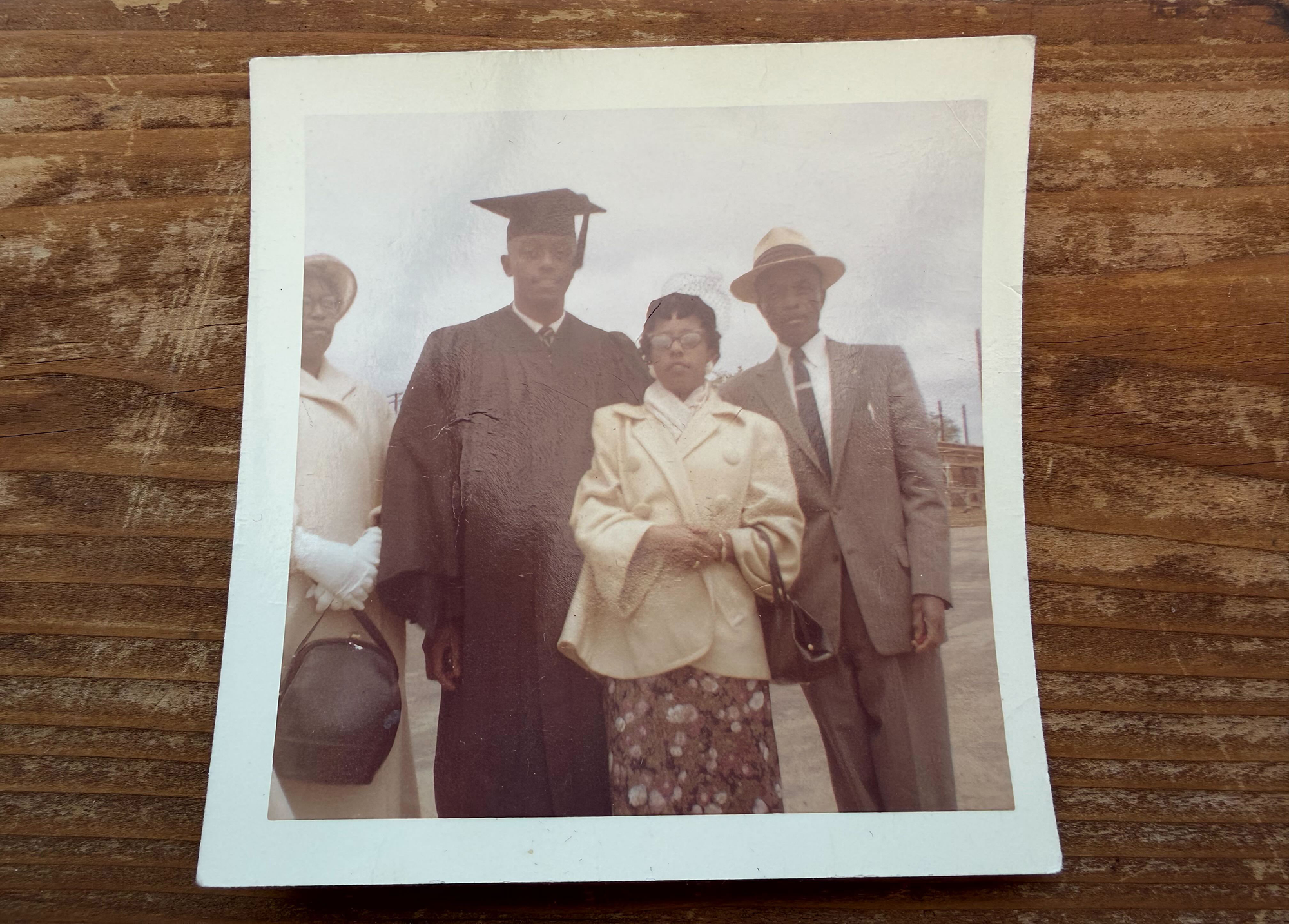
Commencement days, clockwise from top: Otis Wade with his parents in 1959; Leonard Blanks with Courtney Blanks in 2005; Solé Blanks in 2025.
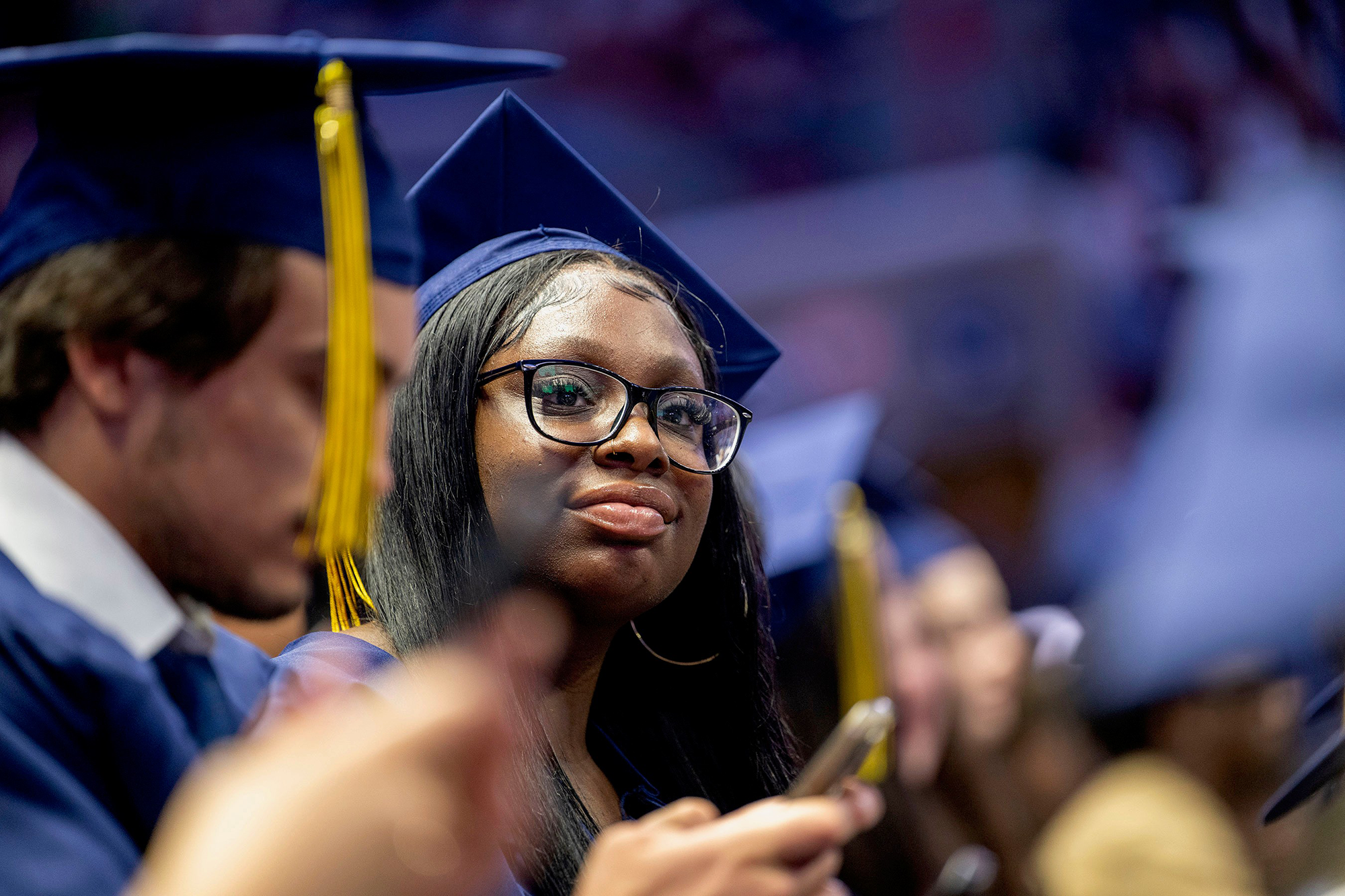
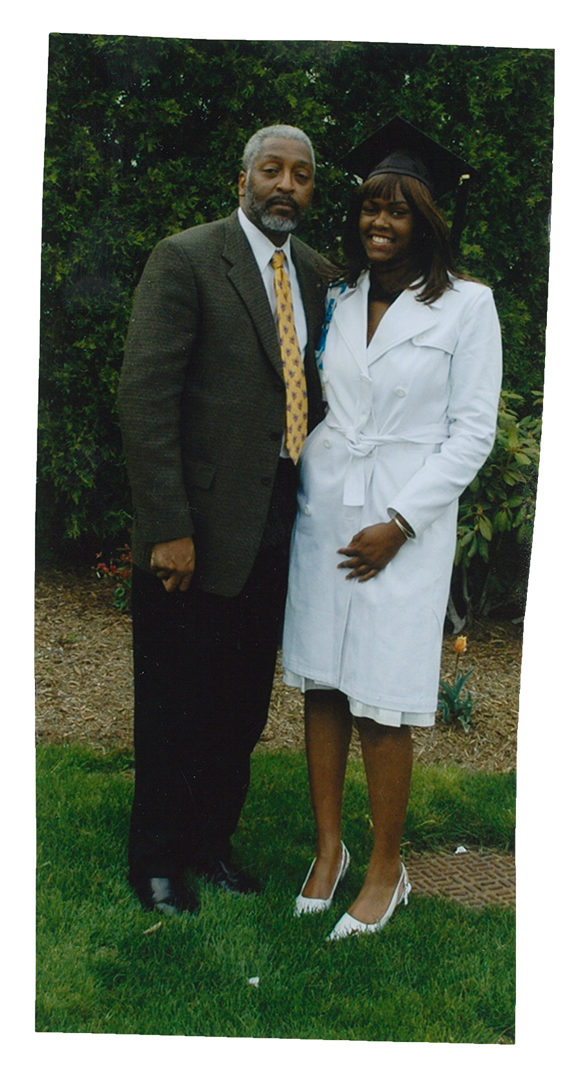
Commencement days: Otis Wade with his parents in 1959; Solé Blanks in 2025.; Leonard Blanks with Courtney Blanks in 2005.
In different ways, UConn allowed each family member to balance their circumstances with their commitment to education. “It’s really inspiring, and it’s something to look up to,” says Solé Blanks, who this May earned a second UConn degree: a master’s in human rights. “Despite everything that happens in life, there are these pillars in your family that you can look to for strength and advice.”
For Solé, who aims to be a lawyer and pursue prison reform, UConn allowed her to stay home to help take care of her younger siblings after her father died just months before her high school graduation. She worked two jobs throughout her college career, commuting home to West Hartford to work every weekend.
“Everybody kind of had a different way they expected things to go. Uncle Leonard, Courtney, and Uncle Sonny all had different [challenges] they were facing,” she says. “UConn was a theme for all of us, and despite everything, we were able to finish at UConn.”
In ways big and small, they shaped UConn — and UConn shaped them.
“As they say, I got the blue-and-white blood in me,” says Leonard, who — through his work first as a graphic designer and eventually as a creative director — left physical marks on all UConn campuses as well. He remembers climbing up the water towers near Towers residence halls to inspect the Husky logo and UConn wordmark graphic that had to be reinstalled after a vendor error.
“You come into campus and as soon as you arrive, you see those water towers. They’re iconic now,” he says. “I made my mark on things that are still standing and will stand.”
Leonard has long been involved in the African American Alumni Council, raising money to create an endowed scholarship that “is going to go on forever and a day.” He’s recruited Courtney to the organization as it pushes to attract more young alumni and strengthen its student success, fundraising, mentorship, and homecoming initiatives.
Solé fondly remembers Leonard taking her on a personal tour of campus a few weeks before her first year, and he brought her to school on her first day of classes.
“I was so proud of her when she chose UConn, carrying on the family legacy of what it means to be a Husky,” says Leonard. “Now, Solé makes us so proud when she talks about getting her master’s degree. The way she communicates about her future, her plans,
her goals — it makes me melt.”
By Julie (Stagis) Bartucca ’10 (BUS, CLAS), ’19 MBA
Photo by Peter Morenus

We know there are many proud Husky families in our midst. Email julie.bartucca@uconn.edu about your multigenerational UConn legacy — we may feature you in a future issue.